Shop All
  Super Deals
  New
New 
Sauna Maintenance Basics
To keep your sauna in good condition, it needs regular care. There is no other room in our homes that has to endure such extreme conditions. Fortunately, keeping your sauna clean, beautiful, and hygienic does not require a lot of effort. The more thoroughly you take care of it after each sauna session, the longer your sauna will last. Below, we share tips for both daily sauna cleaning and more thorough maintenance that should be done about once a year.
The sauna is a special room and needs your attention
A sauna is a special space because it accumulates a lot of moisture. Sweat, body care products, and leaves from sauna whisks also end up on various surfaces. Light cleaning after each sauna session helps keep the sauna hygienic and prevents more serious damage. It also makes the annual deep cleaning much easier.
Light cleaning after every sauna session
Taking care of your sauna after a relaxing steam session is not complicated. In most cases, a ladle, a brush, and a damp cloth are enough. Surfaces can be cleaned with water, and it is important to let the room ventilate afterward.
You can read more detailed sauna care instructions here:
https://factory.sale/how-to-bequeath-your-barrel-sauna-to-future-generations/
After every sauna session, do three simple things:
- Sweep up sauna whisk leaves and other loose debris.
- Wash the sauna benches and floor with warm water.
Good tip:
Cleaning immediately after each sauna session makes dirt easy to remove and makes later deep cleaning much simpler. Rinse surfaces with water to remove sweat and residues from body care products (e.g., honey, body scrubs, and masks). For dirt brought in from outside on bare feet, use a scrubbing sponge.
Rinse the benches with cold water. This closes the wood pores and helps the surface repel dirt.
To dry the room, open the ventilation hatch or the sauna door.
If you use the sauna frequently or many people use it, it is advisable to disinfect the steam room, benches, and shower area every few sauna sessions. Do not forget to clean the drain as well.
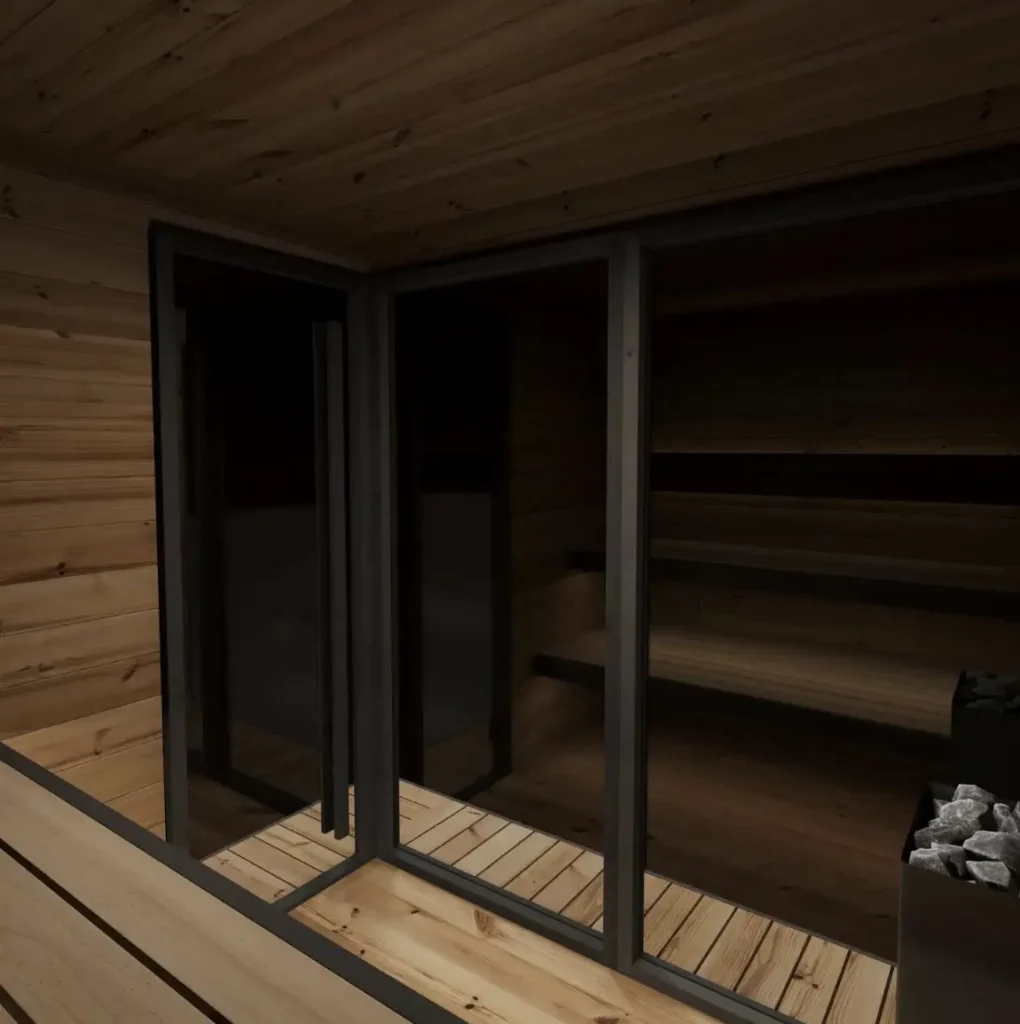
Thorough maintenance once a year
As a rule of thumb, a deep cleaning of the sauna benches and walls, as well as replacing worn or damaged parts, should be done once a year.
If you use the sauna frequently, you should scrub the benches, walls, and floors with a scrubbing brush and sauna cleaner every six months.
Wood protection should be renewed on average every 1–3 years, depending on how heavily the sauna is used.
Deep cleaning and maintenance of wooden surfaces
Thoroughly scrub the cleaned sauna walls, floor, and benches with a soft brush and a special sauna cleaning agent.
Good tip:
You can get suitable cleaning products from a hardware or sauna store. Take note of the materials used in your sauna (wood, ceramic tiles, metal) and ask for products suitable for use in damp spaces. Special sauna cleaners help remove limescale stains, make cleaning easier, and add protective properties to surfaces.
When washing benches with detergent, always brush along the wood grain. Rinse the detergent thoroughly and rinse the benches with cold water to improve dirt resistance. Let the sauna dry slowly by heating it for at least 30 minutes.
Stubborn dark stains on benches can be removed with sandpaper. It is best to sand the entire bench surface. Sanding only worn areas may leave visible marks afterward.
Once the sauna is clean and dry, apply a fresh protective layer to the wooden surfaces.
Good tip:
Sauna wood usually needs a new protective layer every 1–3 years. Use a special oil, varnish, or sauna wax. Treat all wooden surfaces, but pay special attention to the benches, which receive the most wear.
There are two types of wood finishes: penetrating (oils and waxes) and surface coatings (sauna varnishes). Oils and waxes are suitable for benches, floors, and walls. Sauna varnish should not be used on bench boards.
For bench maintenance, impregnation oil works well. It closes the wood pores and protects against moisture and dirt. The most common oils are paraffin oil and linseed oil. Apply the oil generously with a wide brush and allow it to absorb deeply into the wood. Wipe off any oil remaining on the surface with a cloth. The drier and cleaner the wood during treatment, the better the result. After applying oil, we recommend heating the sauna. Heat forces excess oil to the surface, where it can be wiped away.
When choosing a suitable wood protection product, ask for advice from a hardware or sauna store specialist. Before visiting the store, make sure you know what types of wooden surfaces your sauna has.
Heater maintenance
At least once a year, check the condition of the heater and the stones. If the heater is worn out, has visible damage, or has problems with the firebox, it must be replaced. A damaged or poorly maintained heater can be a fire hazard.
When choosing a new heater, it is important that its power matches the size of your steam room. You can find help selecting the right electric or wood-burning heater in our blog article and sauna calculator.
If your sauna has a wood-burning heater
- Empty the ash drawer before each heating, as it regulates airflow.
- Wipe dust and dirt off the heater with a damp cloth.
- Have a specialist clean the chimney and flue at least once a year.
If your sauna has an electric heater
Regular dust and dirt can be wiped off with a damp cloth.
Good tip:
Contact with steam water can cause limescale stains on the heater. Most sauna cleaning products contain ingredients that help remove these stains.
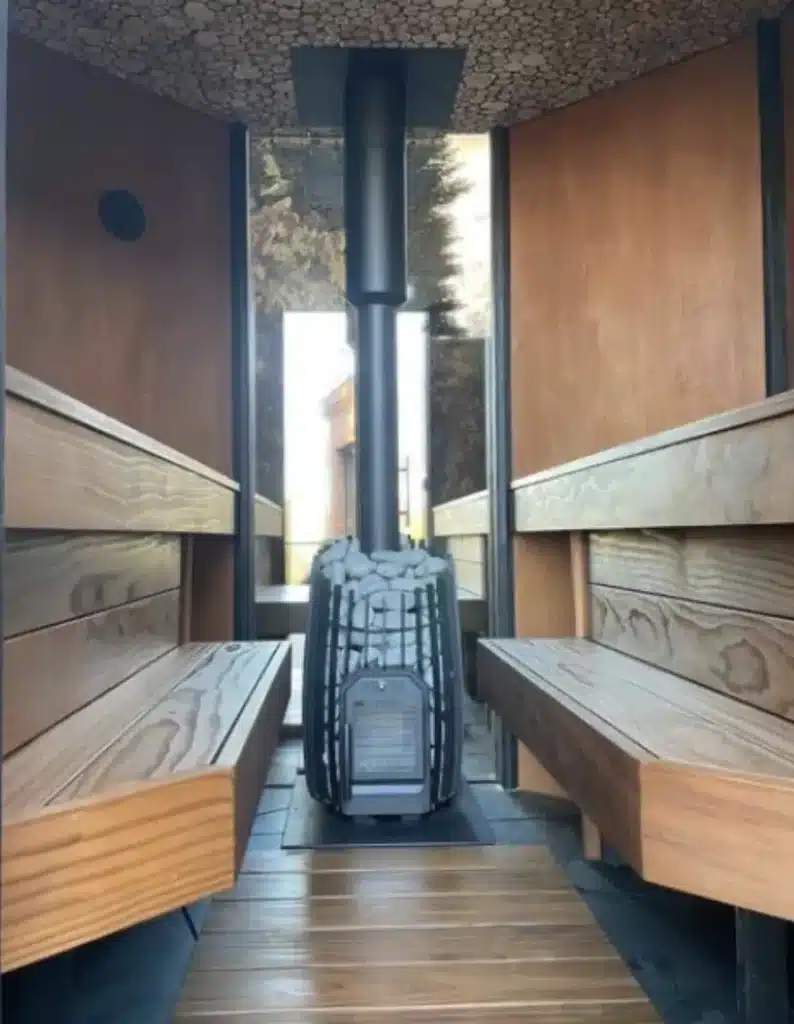
Good tip:
For stainless steel heaters, ask for a suitable cleaning product at a sauna or hardware store. Use a soft cloth, such as microfiber, and clean along the steel’s surface grain. Do not use abrasive pastes or scouring pads, as they may damage the heater’s appearance.
If the sauna has not been used for a long time or you suspect that some heating elements are not working, remove some stones to check them. If the heating elements do not heat up or glow red after turning on the heater, they are broken and must be replaced.
When should heater stones be replaced?
Heater stones also require care and attention. They do not last forever and gradually crumble due to steam water and large temperature changes. Settling stones and small stone fragments can block airflow between the stones. This affects steam quality, heating speed, and heater lifespan. For good steam, air must circulate freely in the heater.
Check heater stones once a year or after 300 hours of heating.
Remove all stones and assess their condition by tapping two stones together.
Replace stones that have crumbled or feel noticeably lighter.
Wash reusable stones with water and a soft brush.
The easiest solution is to replace all stones at once. You can also read more about how often heater stones should be replaced in our earlier blog article.
From our previous blog article, you can also learn how to prepare heater stones before use and how to stack them correctly in the heater.
How often the sauna needs cleaning depends on usage frequency and intensity. You are the best judge of this. A good rule of thumb is light cleaning after every sauna session and thorough maintenance once a year. If you inspect your sauna carefully after each session and leave it clean for the next visit, it will always be a pleasure to return.
Source: HUUM