Shop All
  Super Deals
  New
New Which Flooring Should You Choose for Commercial Premises? A Practical Guide from Offices to Production Areas
When renovating commercial premises, a lot of attention is usually paid to the layout, lighting, furniture, and interior design, while one of the most heavily used surfaces is often undeservedly overlooked. Flooring has a significant impact on the overall appearance of a space, but in a commercial environment its role is much broader. In addition to looking good, it must withstand everyday use, be easy to maintain, and suit the specific way the space is used.
For this reason, there is no single universal flooring solution that works equally well in an office, shop, warehouse, or production area. In a representative office, the atmosphere created by natural materials may be an important selection criterion, while in a high-traffic commercial space, wear resistance and ease of maintenance become decisive. In warehouses or production facilities, the floor must withstand loads that are not typically encountered in an ordinary office environment.
Therefore, when choosing flooring for commercial premises, it is better to start not with the question “Which floor do we like?”, but with what the floor needs to withstand in that particular space every day.
Choosing Flooring for Commercial Premises Starts with How the Space Is Used
The first factor to assess is the level of foot traffic. The floor in a small office used by a few dozen people each day operates under very different conditions from the floor of a shop or service area that may be crossed by hundreds of visitors daily. Even greater demands arise in warehouses, garages, and production facilities, where goods, carts, machinery, and equipment also move across the floor.
Moisture and dirt must also be taken into account, especially in areas with direct access from outdoors. Estonian autumns and winters inevitably bring water, mud, sand, and snow indoors on footwear, meaning that the floor must tolerate both moisture and regular cleaning.
The third important consideration is maintenance and service life. Commercial flooring is rarely chosen for just a couple of years, so in addition to the purchase price, it is worth evaluating how much maintenance the material requires, how well it retains its properties, and when repairs or replacement may become necessary.
Only after these questions have been considered should design become the focus, because modern material choices generally make it possible to combine the technical characteristics required by the space with the desired appearance.
Which Flooring Is Suitable for an Office?
Office flooring must fulfil both a practical and an aesthetic role. It is an everyday working environment, but often also a place where clients, business partners, and potential employees are received, meaning that the interior directly influences the first impression of the company.
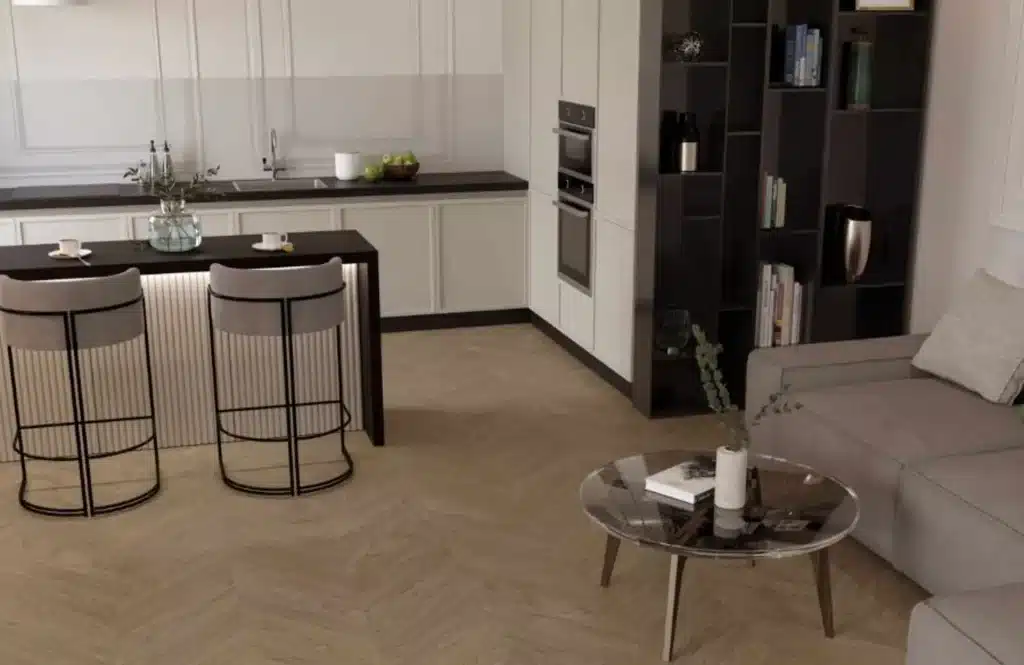
If the goal is to create a representative, warm, and timeless working environment, natural parquet flooring is worth considering. Wood brings warmth even to minimalist office interiors, and well-chosen high-quality parquet is less dependent on rapidly changing interior design trends.
One of the most classic options is oak parquet, whose natural wood grain suits interiors with very different styles. For a calmer and more spacious overall impression, a 1-strip parquet can be selected, while herringbone parquet or a Chevron pattern works well in spaces where the floor itself is intended to become a design feature.
When choosing parquet, however, the actual usage level of the office must be taken into account, because the requirements of a small office and a large open-plan workplace can differ considerably. In addition to the type and appearance of the wood, it is therefore important to evaluate the durability and maintenance requirements of the specific flooring solution.
Which Flooring Should You Choose for a Shop or Service Area?
In shops, salons, service spaces, and other high-traffic commercial premises, wear resistance becomes one of the most important selection criteria. The floor must withstand constant movement while maintaining a neat appearance, because worn or difficult-to-maintain flooring inevitably affects the overall impression of the space.
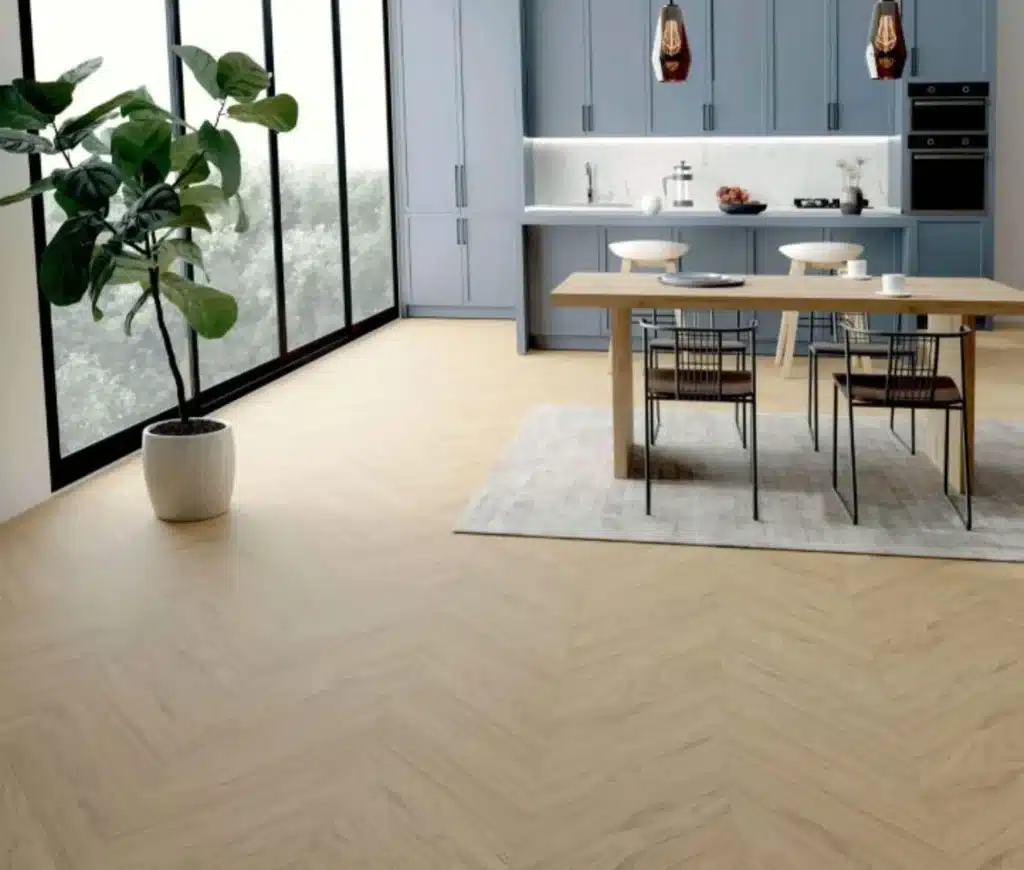
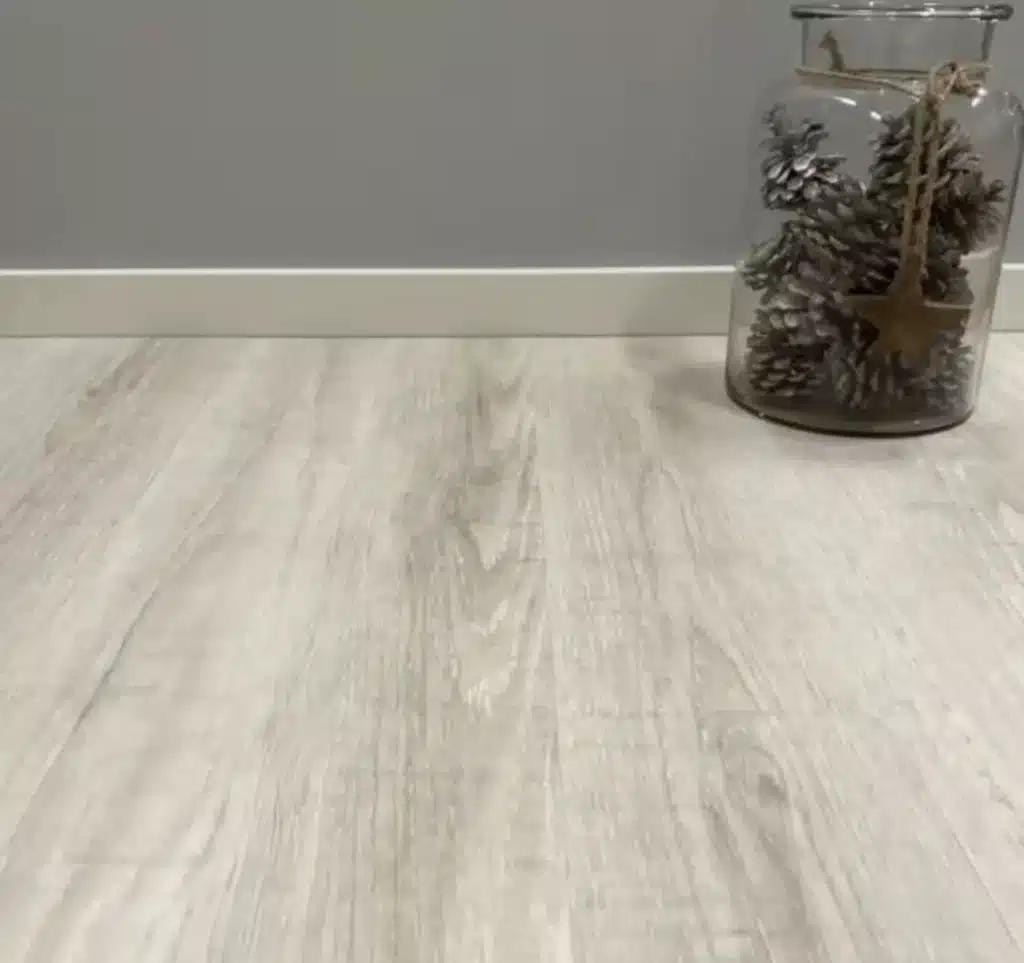
In such an environment, vinyl flooring is worth considering, as it combines practicality with versatile design options. The advantages of high-quality vinyl flooring include good wear resistance, water resistance, and easy maintenance, making it well suited to areas where the floor is used intensively.
Modern vinyl floors can also achieve an appearance similar to natural wood, meaning that a heavily used commercial space does not have to sacrifice a warm and carefully designed interior for the sake of practicality.
Ease of maintenance is especially important in spaces where the entrance opens directly onto the street or outdoors. During autumn and winter, more moisture and dirt reach the floor, so the surface requires more frequent cleaning. In a large commercial space, even a small difference in everyday maintenance requirements can translate into significant savings in time and money over the years.
Warehouse, Garage, and Workshop Floors Require a Different Approach
While appearance plays an important role in offices and shops, technical characteristics become the main priority in warehouses, garages, and workshops.
In these areas, the floor must withstand not only foot traffic but also heavier objects, tools, machinery, and equipment. Depending on the company’s operations, the floor may also come into contact with oils, chemicals, or other substances not typically found in a standard office environment.
For this reason, the floor effectively becomes part of the working environment’s infrastructure.
One option for high-load areas is a modular PVC floor such as Fortelock, where the tiles are connected using an interlocking system. In such a solution, both wear resistance and chemical resistance are important, as the floor must retain its properties even under more demanding operating conditions.
Another advantage of modular flooring is that a damaged section can be replaced individually if necessary, without having to remove the entire floor. Air channels beneath the tiles may also help the floor breathe and reduce moisture accumulation, which can be useful in garages, warehouses, and older workshop or production buildings.
Which Flooring Is Suitable for a Production Area?
When selecting flooring for a production facility, the choice should be based on the company’s specific work processes, because the loads placed on the floor can vary considerably between different types of production.
Before choosing a floor covering, it is worth assessing what machinery will be located in the space, how intensive the movement of goods will be, what substances the floor may come into contact with, and whether certain areas will be exposed to greater point loads.
If heavy machinery is used in the production area or goods are moved intensively, it is advisable to choose flooring that has been designed from the outset to withstand higher loads. Industrial PVC flooring can be a practical solution in such situations because its properties are specifically intended for more demanding applications.
In production spaces, it is particularly important to view flooring as a long-term investment. While replacing flooring in an office may cause some inconvenience, repairs in a production facility may also require a temporary shutdown of operations. As a result, an unsuitable flooring solution can lead to significantly higher costs than simply the price of the replacement material.
Should the Same Flooring Be Used Throughout the Entire Commercial Space?
For larger commercial premises, it may seem easiest to use the same flooring throughout all rooms, but in practice this may be neither the most practical nor the most economical solution.
If a company has a reception area, office, warehouse, and technical rooms, each of these spaces has a different level and type of use and therefore different flooring requirements. In such cases, it may make sense to divide the premises into zones according to their function and select the most suitable material for each area.
For example, natural parquet can be used in reception and office areas, durable vinyl flooring in higher-traffic common areas, and heavy-duty industrial flooring in warehouse and technical spaces.
This approach makes it possible to invest in the properties that are genuinely needed in each area and avoids having to choose one compromise solution for the entire building.
Parquet, Vinyl, or Industrial Flooring – How Do You Make the Right Choice?
The easiest way to compare flooring materials is by looking at their main areas of use.
Parquet is primarily suited to offices, meeting rooms, and representative spaces where the appearance of natural materials is valued and the goal is to create a warm, high-quality interior.
Vinyl flooring is a practical choice for shops, service spaces, and other higher-traffic commercial premises where durability, moisture resistance, and easy maintenance are important.
Industrial PVC flooring is especially suitable for warehouses, garages, workshops, and production facilities where the floor must withstand greater mechanical loads and more demanding conditions.
These are not absolute rules, however, because the final choice always depends on the specific characteristics and use of the space. For a larger B2B project, it is therefore advisable to assess the premises as a whole rather than focusing only on the properties or square-metre price of one material.
The Real Cost of Commercial Flooring Is More Than Just the Price per Square Metre
For large commercial premises, the price per square metre has a significant impact on the overall cost of the project, so naturally price plays an important role when choosing flooring. However, the lowest purchase price does not necessarily mean the most economical solution.
The true cost of a floor is influenced not only by the material price but also by installation, maintenance requirements, durability, and expected service life. If a cheaper floor needs to be repaired or replaced after only a few years, its total cost may become higher than that of a solution that initially seemed more expensive but was better suited to the usage demands of the space.
For B2B projects, it is therefore worth assessing the entire lifecycle of the flooring. If the solution is installed for five, ten, or even more years, the initial purchase price becomes less important than how the floor performs over that period and what maintenance and repair costs it creates for the company.
Autumn Is a Good Time to Renovate Commercial Premises
During autumn, everyday activities increasingly move indoors, and as the normal working rhythm resumes, deficiencies in commercial spaces often become more noticeable. Worn walkways, difficult-to-clean surfaces, or flooring that is unsuitable for the way a particular room is used can affect both the working environment for employees and the impression made on clients and business partners.
Autumn is therefore a good time to take a critical look at commercial premises and assess whether the existing solutions still meet the company’s needs. If the flooring is worn or requires an unreasonable amount of maintenance, it may be worth considering a material better suited to the actual use of the space when planning the next renovation or development project.
Updating the floor is therefore not simply a visual change. The right solution can make the space easier to maintain, improve usability, and reduce long-term repair and maintenance costs.
Good Commercial Flooring Works Together with the Space
Which flooring is best suited to commercial premises? There is no single universal answer, because offices, shops, warehouses, and production areas all place very different demands on flooring.
Natural parquet may be suitable for offices and representative spaces, while vinyl flooring may be a more practical option in high-traffic shops or service areas. For warehouses, garages, workshops, and production facilities, heavy-duty industrial flooring is worth considering.
The most important thing is to view flooring as part of the entire working environment. A well-chosen solution should not draw attention to itself every day. On the contrary, good flooring performs its task almost unnoticed: it withstands the demands of the space, remains reasonably easy to maintain, and retains its properties even after years of use.
For this reason, flooring for commercial premises should be selected with a long-term perspective. It is not merely one element of interior design or renovation, but an investment in a space that the company uses every day.