Shop All
  Super Deals
  New
New I thought the sauna was just for relaxation…
The sauna is deceptively simple. We associate it with silence, heat, and sweat – something that “feels healthy,” but that we don’t think about very deeply. But what happens when someone decides to truly measure the effects of sauna use? That is exactly why Bryan Johnson’s publicly shared sauna experiment caught my attention. Not because he uses a sauna, but because of how he uses it and what he measured.
- levels of microplastics in the blood
- environmental toxins
- fertility markers
- the biological age of blood vessels
These are not things we usually associate with casual sauna talk. And yet—there they were, line after line, number after number. It raises a question: is the sauna actually much more than just a ritual?
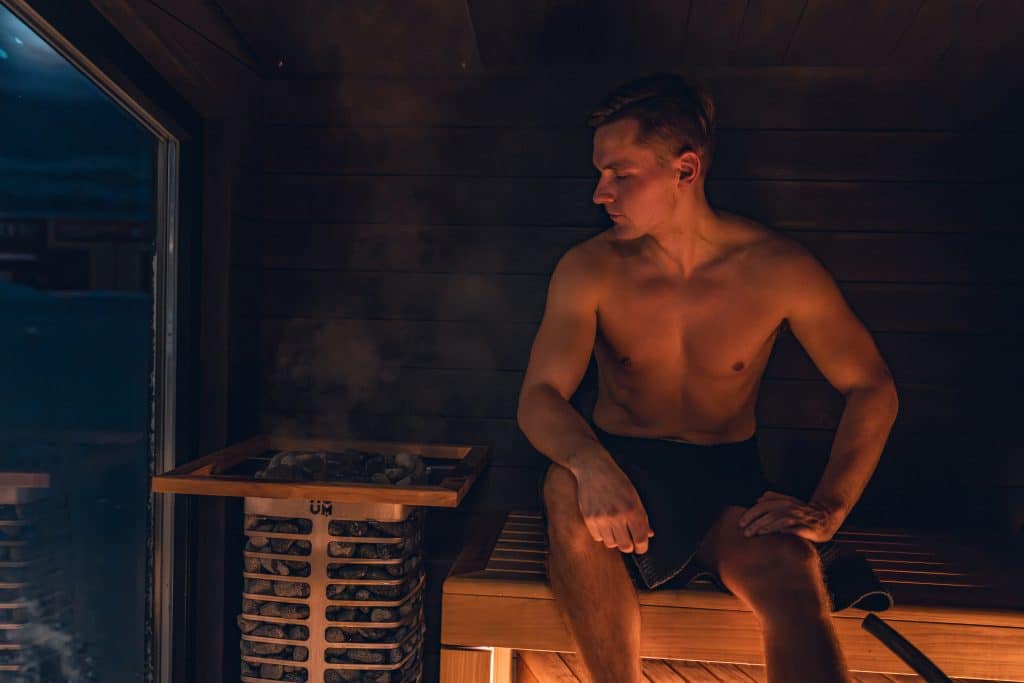
Sauna as a protocol, not a ritual
Bryan Johnson does not treat sauna bathing as a momentary form of relaxation. For him, it is a protocol—precise, repeatable, and measurable. He used a hot dry sauna with the following parameters:
- temperature between 80–100 °C (mostly around 93 °C),
- very low humidity (5–20%),
- duration of 20 minutes,
- frequency of 4–7 times per week.
This detail matters. A dry sauna affects the body differently than a steam sauna or an infrared cabin. In dry heat, the skin heats up faster than the body core, creating a strong but controlled stress response. This is known as hormesis – becoming stronger through small, temporary stress. The same principle applies to exercise, cold exposure, fasting, and even learning.
But sauna use comes with one major assumption: it must be done consistently and under controlled conditions. This is where sauna use suddenly becomes a practical issue rather than a philosophical one. In a public sauna, you cannot choose the temperature, calmly control the duration, or closely observe your body’s reactions.
A home dry sauna changes the entire experience – it is not a luxury, but control.
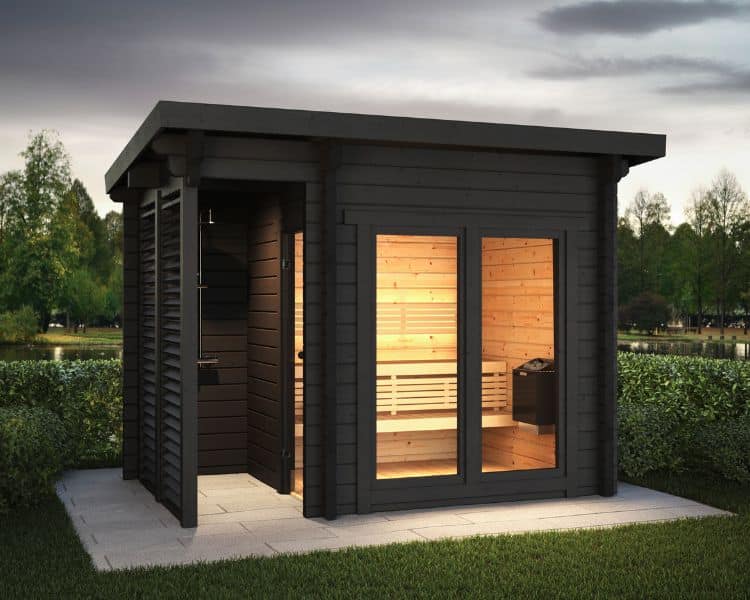
That is exactly the kind of classic dry sauna also found in the Factory.Sale selection, where the focus is not on a “spa experience,” but on stable heat and durable construction:
https://factory.sale/product-category/stock-products/saunas
Harmful substances we usually don’t talk about
The most surprising part of Johnson’s data was not his blood vessels or heart rate, but environmental toxins. After 15 sauna sessions, significant decreases were measured in several substances that we all encounter daily – residues of herbicides, plastics, and industrial chemicals. Some of them dropped to levels that the laboratory could no longer detect.
Does this mean the sauna “detoxifies” the body? The honest scientific answer is: not that simply.
What we do know is that:
- the liver and kidneys do the main detox work,
- some substances are excreted through sweat,
- regular heat exposure affects circulation and metabolism.
The sauna is not a detox cure, but it may be one tool for reducing the burden in a world where complete purity is no longer avoidable.
Microplastics: fact, not hypothesis
Then we come to microplastics – a topic we have all heard about, but that very few people have actually measured in their own bodies.
According to Johnson’s data:
- microplastics in his blood decreased from 70 → 10 particles/ml,
- in semen from 165 → 20 particles/ml.
These numbers are striking. But it is important to stay reasonable: this is one person, not a clinical study. And yet it says something important—the body is not a static system. It responds to environment, temperature, and stress in ways we are only beginning to understand.
Heat and fertility: where mistakes are not allowed
The most instructive—and honestly the harshest—part of Johnson’s experience concerns fertility. When he used the sauna without cooling his testicles, his sperm parameters dropped sharply:
- motility,
- concentration,
- morphology.
Biology is unforgivingly clear here. The testicles are located outside the body for a reason: sperm production requires a lower temperature. Prolonged heat damages this process.
When Johnson added active cooling (ice packs throughout the session) to his protocol, the picture changed dramatically. After some time, his fertility markers were higher than those of 99.6% of men across all age groups.
There is no moralizing or macho talk here – just a fact:
dry sauna + cooling = a choice.
dry sauna without cooling = a risk
And this applies even if having children is not part of the plan. Sperm quality is closely linked to testosterone levels, metabolism, and overall hormonal balance.
Why details matter more than motivation
Johnson also emphasized hydration. During a single 20-minute session, he lost nearly half a liter of fluid and up to 700 mg of sodium. Water alone may not be enough to restore this balance. This is where many people go wrong. They do the “right” things, but ignore the details and small factors that actually matter a great deal.

What can we conclude from all this?
The sauna does not automatically make a person healthier. But when used correctly, it can:
- improve circulation,
- support recovery,
- train stress tolerance,
- help the body adapt better to an environment that is no longer natural.
This requires awareness, not enthusiasm. If the sauna is something you do “once in a while,” its impact is limited. If it becomes a practice, the results change. This is where the logical reason emerges for why many people move toward a home dry sauna – not for convenience, but to do things correctly and consistently.
Factory.Sale’s sauna selection is a good example of this approach – classic, simple dry saunas that do not promise miracles, but enable routine:
https://factory.sale/product-category/stock-products/saunas/
Bryan Johnson’s sauna story is not a guide to follow blindly. It is a reminder that working with the body should be measurable, reactions should be observed, and the most important thing is honesty with oneself. The sauna – one of humanity’s oldest ritual spaces – can today be much more than just a hot room and steam, if used consciously.
Sources for the article’s facts:
https://www.instagram.com/p/DSauiEPkuyr/