Shop All
  Super Deals
  New
New 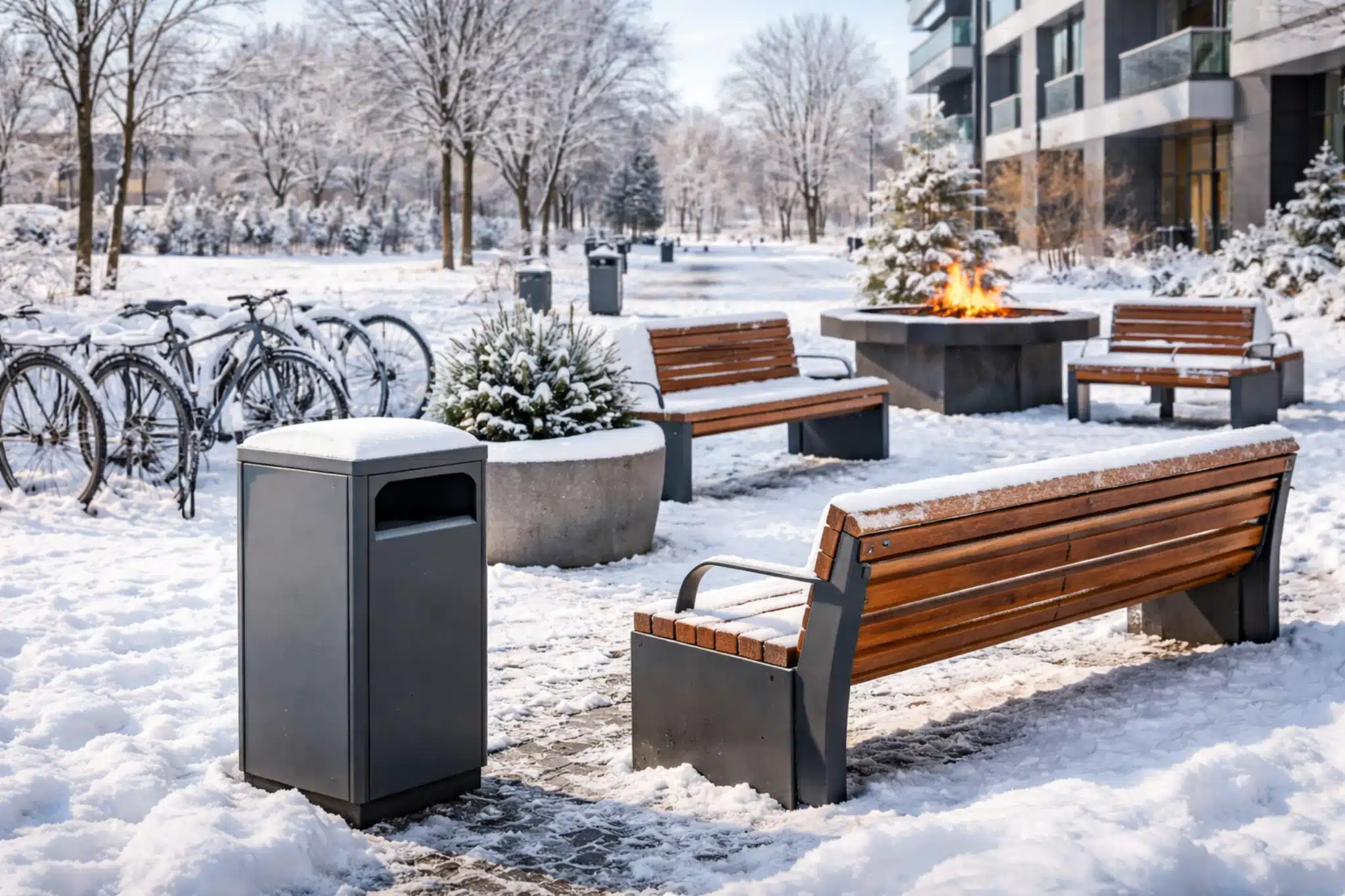
How Does Urban Furniture Withstand Winter – What Do Municipalities and Developers Take Into Account?
Winter is the most demanding test period for urban space. Cold, moisture, repeated freeze–thaw cycles, snowplows, and de-icing agents all have a significant impact on urban furniture. It is precisely during the winter months that it becomes clear whether solutions installed in public space are designed to last or whether they turn out to be short-term compromises that lead to additional maintenance and replacement costs.
For municipalities and real estate developers, the choice of urban furniture is therefore not merely an aesthetic issue. It is a strategic investment that affects the functionality, safety, usability, and long-term cost efficiency of public space. This article approaches the selection of winter-resistant urban furniture from a practical perspective, focusing on products such as bicycle racks, bollards, benches, waste bins, and fire tables.

Winter as the True Durability Test for Urban Furniture
In Estonia—and more broadly in Northern Europe—winter is not an exceptional condition but a natural part of the urban environment’s life cycle. Therefore, solutions planned for public space must take several parallel influences into account.
First, environmental factors affect materials. Moisture and temperature fluctuations cause metal corrosion, wood swelling, and cracking of coatings. Second, mechanical stress is added, resulting both from intensive use and from maintenance equipment. Snowplows, tractors, and garbage trucks can damage poorly placed or inadequately anchored elements. Third, social stress must be considered, as the risk of vandalism increases during darker periods with less supervision.
For example, bicycle racks designed only for summer use may lose stability in winter or become hazardous to users. Similarly, waste bins whose emptying mechanisms are not frost-resistant can create additional work and disruptions in urban maintenance.
Practical recommendation: already in the early planning phase, it is worth assessing whether the proposed urban furniture is intended for year-round use and whether the manufacturer has taken Nordic climate conditions into account.
Material Selection as the Basis for Long-Term Durability
When it comes to winter-resistant urban furniture, material selection is one of the most important decision factors. Practice shows that solutions using hot-dip galvanized and powder-coated steel, concrete, and weather-resistant composite materials perform best. These materials withstand both moisture and the chemical effects of de-icing agents.
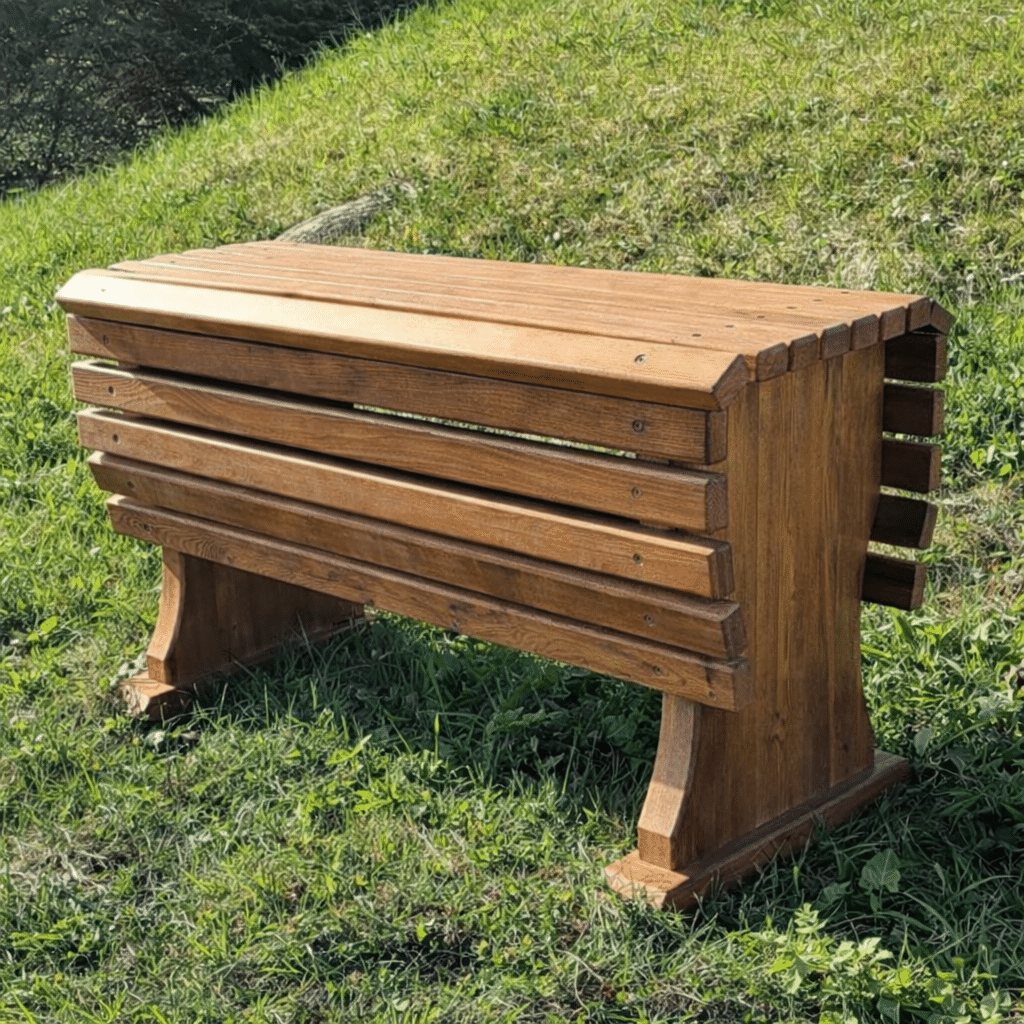
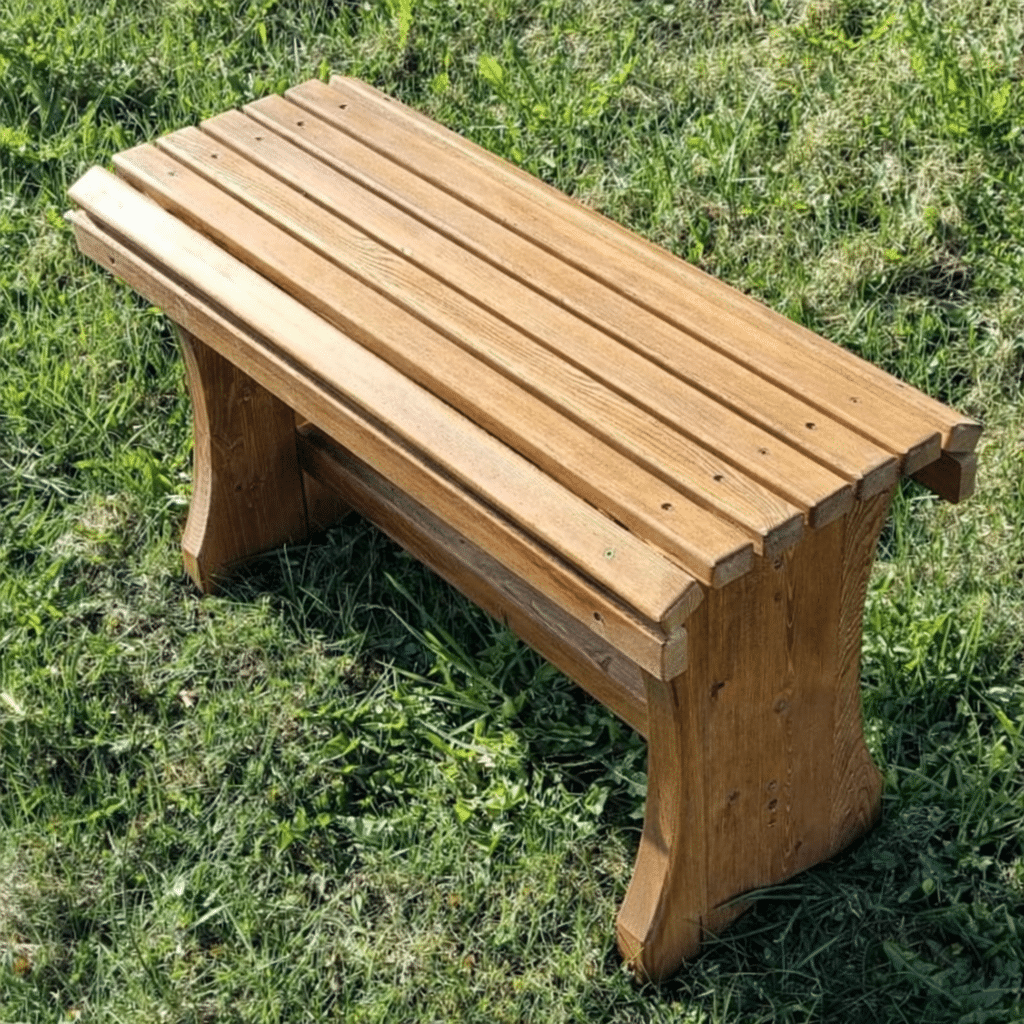
Wood is an important aesthetic element in urban space, but in a winter environment it requires thoughtful use. Properly treated and finished wooden components are well suited for benches and fire tables, for example, but only if regular maintenance and potential wear points have been taken into account. Otherwise, wood can quickly lose its appearance and functionality.
It is important to evaluate not only the type of material but also how it is processed—for example, coating thickness, protection of welds, and the durability of joints. These details often determine the product’s actual service life.
Maintenance and Life-Cycle Costs – An Invisible but Decisive Factor
When selecting urban furniture, attention is often focused on the initial price, but for the public sector and larger development projects, the total life-cycle cost is more decisive. This includes maintenance, repairs, availability of spare parts, and replacement when necessary.
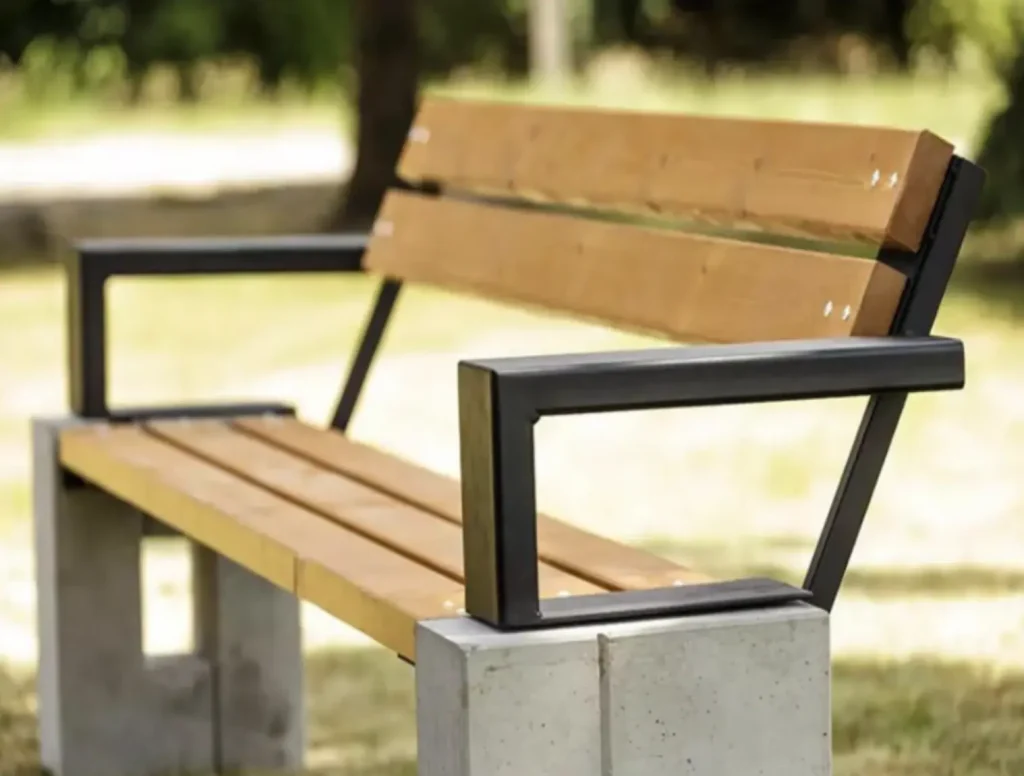
For example, benches and bollards with replaceable components allow damaged parts to be replaced quickly and cost-effectively. This reduces situations where the entire element must be removed or replaced. Maintenance is also simplified by a clear and logical design that does not collect dirt or snow in hard-to-reach areas.
Practical recommendation: when choosing urban furniture, it is worth asking the manufacturer for maintenance instructions and assessing what resources are required to keep the products in good condition during winter.
Vandalism Resistance as Part of a Safe Urban Environment
The winter period, when days are shorter and public spaces are less monitored, increases the risk of vandalism. Therefore, vandalism resistance is an important criterion, especially in city centers, parks, and public transport hubs.
Vandalism resistance is supported by:
- massive and heavy structures, such as concrete bollards;
- concealed fixings and lockable service openings;
- materials that withstand impacts and scratches without losing functionality.
For example, waste bins designed so that they cannot be easily tipped over or set on fire reduce both risks and maintenance costs. Fire tables intended for public space must be designed for controlled and safe use, taking into account both fire safety and durability.
Functionality Across Different Product Categories
Winter resistance does not mean the same thing for all products. Each category of urban furniture serves a different role and must therefore be evaluated separately.
- Bicycle racks must support year-round mobility, maintaining stability and ease of use even in snowy conditions.
- Bollards help guide traffic, protect landscaping, and prevent vehicles from entering pedestrian areas, even in slippery conditions.
- Benches create opportunities to rest and spend time in public space even in colder weather, provided that seating surfaces do not become slippery or collect moisture.
- Waste bins are critical to maintaining urban cleanliness and must function reliably even at sub-zero temperatures.
- Fire tables add community value to public space, extending the use of outdoor areas into the winter season.
The Right Choices Start at the Right Time
The selection of urban furniture is most effective when it takes place in collaboration during the planning and design phases. Later changes are often more expensive and limited. Municipalities and developers who involve urban furniture specialists early are better able to take both technical and aesthetic requirements into account.
It is important to choose a partner with experience in local conditions, an understanding of public-sector requirements, and the capacity to provide support even after installation.
Call to action: if you are looking for winter-resistant and professional urban furniture solutions for a municipality or development project, it is worth exploring the options already at the planning stage and seeking technical advice before making final decisions.
Winter is not an exceptional condition for urban furniture, but a normal operating environment that must be considered from the very first planning decision. Durable material choices, well-thought-out construction, vandalism resistance, and low life-cycle costs create public spaces that function reliably year-round.
Well-chosen urban furniture is not an expense, but a long-term investment in the quality of public space—supporting both user well-being and the reputation of a city or development project.
Explore our range of urban furniture or contact us to find a suitable, winter-resistant, and sustainable solution for your project: order@factory.sale